
1. When Controversy Becomes the Brand
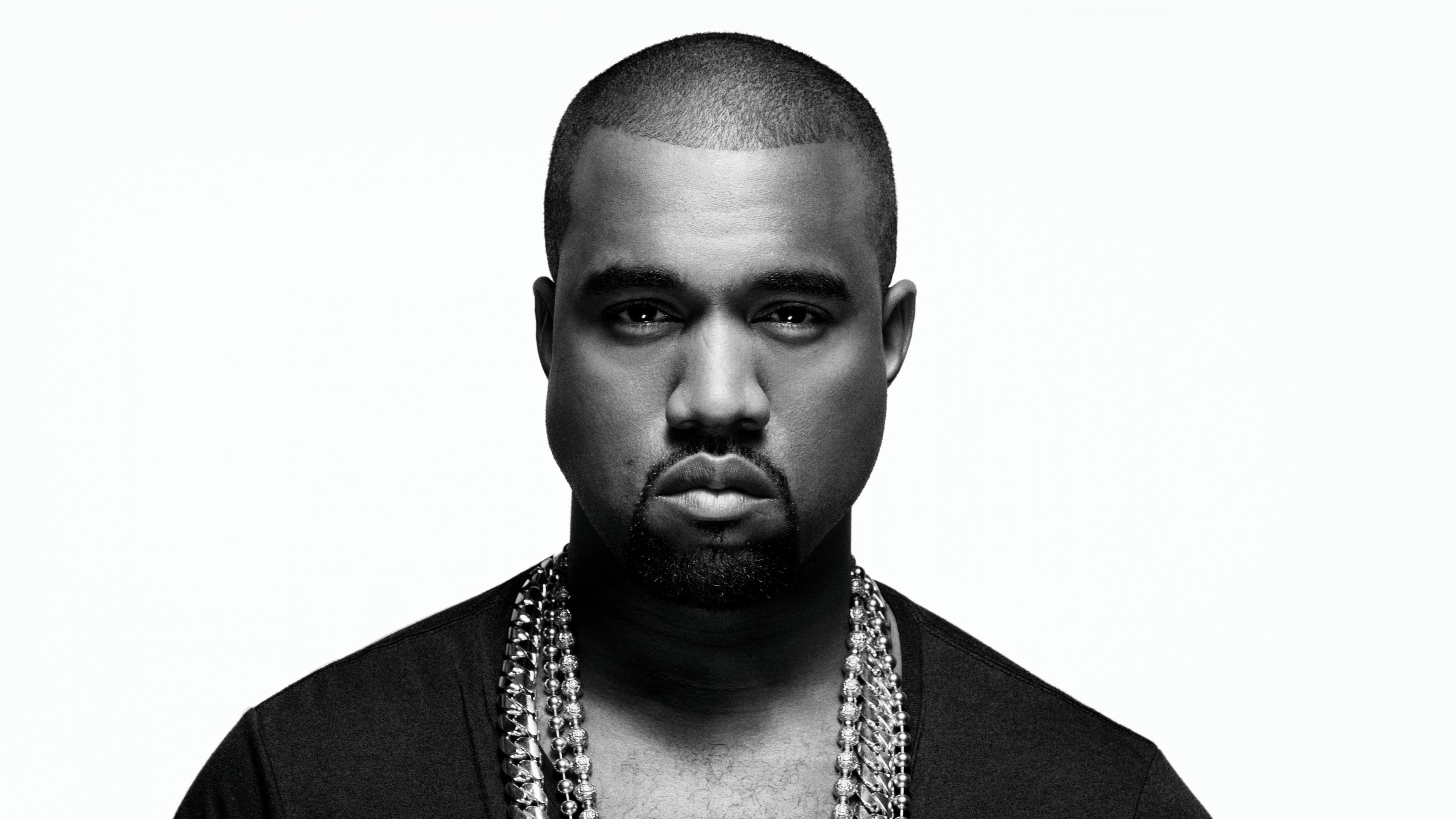
Kanye West’s greatest marketing asset has never been his music, it’s himself. He has repeatedly dismantled and rebuilt his own image on a scale few musicians have ever attempted, yet he has never lost his commercial or cultural value. His defining tools have always been unpredictability and conflict. What looked like emotional volatility was, in reality, a controlled strategy. He never avoided controversy; he amplified it to command attention.
Throughout his career, his formula has remained constant: controversy → awareness → discourse → revenue.
West turned chaos itself into brand energy.
Related Article: The Power of Gimmicks in Entertainment Today
2. Credibility Built on Craft

Kanye began as a producer for Jay-Z’s The Blueprint (2001), earning credibility through precise sampling and intricate arrangements that redefined hip-hop production. He later established himself as both rapper and producer with The College Dropout (2004) and Late Registration (2005).
His sound evolved between experimentation and accessibility. On Graduation (2007), “Good Morning” featured artwork by Japanese artist Takashi Murakami, expanding a hip-hop record into a visual art brand.
The same album’s “Stronger” sampled Daft Punk’s “Harder, Better, Faster, Stronger,” blending robotic precision with pop rhythm. It marked the moment hip-hop fully absorbed electronic aesthetics and entered the global mainstream.
In 2010, “Runaway” arrived with a self-directed short film, merging music and visual narrative. That same year, “Power” used classical and religious imagery to visualize dominance and ego. During this period, West combined musical precision with conceptual storytelling, proving himself an artist validated by craft before controversy.
3. The VMA Incident: The Beginning of Controlled Chaos
At the 2009 MTV Video Music Awards, Kanye interrupted Taylor Swift’s acceptance speech, declaring that “Beyoncé had one of the best videos of all time.” The moment went viral, making him both villain and headline.
What seemed like spontaneous arrogance became the start of his modern noise strategy. Though condemned by fans and media, global search trends for “Kanye West” hit No. 1. Soon after, he transformed backlash into art. My Beautiful Dark Twisted Fantasy (2010) turned confession and ego into spectacle.
Later albums like Yeezus (2013), The Life of Pablo (2016), and Ye (2018) launched amid social and religious debate. His brand followed a clear loop: controversy → curiosity → conversation → conversion.
4. Glastonbury and the Globalization of Controversy
When Kanye was announced as the 2015 headliner for Glastonbury Festival, backlash erupted. Over 130,000 people signed a petition demanding his removal, claiming hip-hop didn’t belong on rock’s sacred stage.
Yet after the show, even critics admitted, “He’s clearly the defining artist of our time.” The debate around his performance became the event’s true legacy. By dominating both stage and conversation, West forced rock audiences to acknowledge hip-hop as a global headlining genre. He turned hostility into proof of influence.
5. Politics as Performance
In 2020, Kanye launched the Birthday Party and announced his run for U.S. president, promising to give every new mother $1 million. While few took the campaign seriously, it transformed politics into performance art.
His political failure became media currency. The goal was never victory, it was visibility.
6. Yeezy: Building a Personal Universe

West’s fashion label Yeezy was more than apparel; it visualized his worldview. When he declared, “I am a god,” it worked as both provocation and philosophy.
Collaborations with Nike and Adidas positioned him as a rule-breaking creator. Yeezy blurred the lines between music, fashion, religion, and technology, turning Kanye himself into a self-contained ecosystem — an artist functioning as a system.
7. “White Lives Matter” and the Commodification of Shock
At Yeezy Season 9 during Paris Fashion Week (2022), West appeared wearing a “White Lives Matter” shirt. Backlash was immediate, yet Yeezy searches and traffic reached record highs.
He later released the design commercially in 2025 under codes WLM-01 and WLM-02. By monetizing outrage, he proved that conflict could be directly converted into commerce.
His marketing thrived not on empathy but on collision.
8. Collapse and Reconfiguration
Anti-Semitic remarks in 2022 caused Adidas, Balenciaga, and others to sever ties, plunging his empire into crisis. Yet his streaming numbers stayed steady, and loyal fans reframed his downfall as proof of authenticity.
Without corporate backing, West rebuilt around a smaller but dedicated community — evolving from a mass-market celebrity into a micro-brand with cult-like loyalty.
9. The Artist Who Controlled Chaos
Kanye West’s marketing doesn’t rely on emotional resonance but on cognitive dissonance. He ensures the public can’t fully understand him — only talk about him.
He moved the entertainment industry from storytelling to story control. In his world, controversy isn’t a flaw; it’s a mechanism.
“In an age of overexposure, silence is death. Noise is survival.”
Kanye West has lived by that rule — engineering chaos, monetizing conflict, and turning crisis into a marketing model.



Leave a Reply