
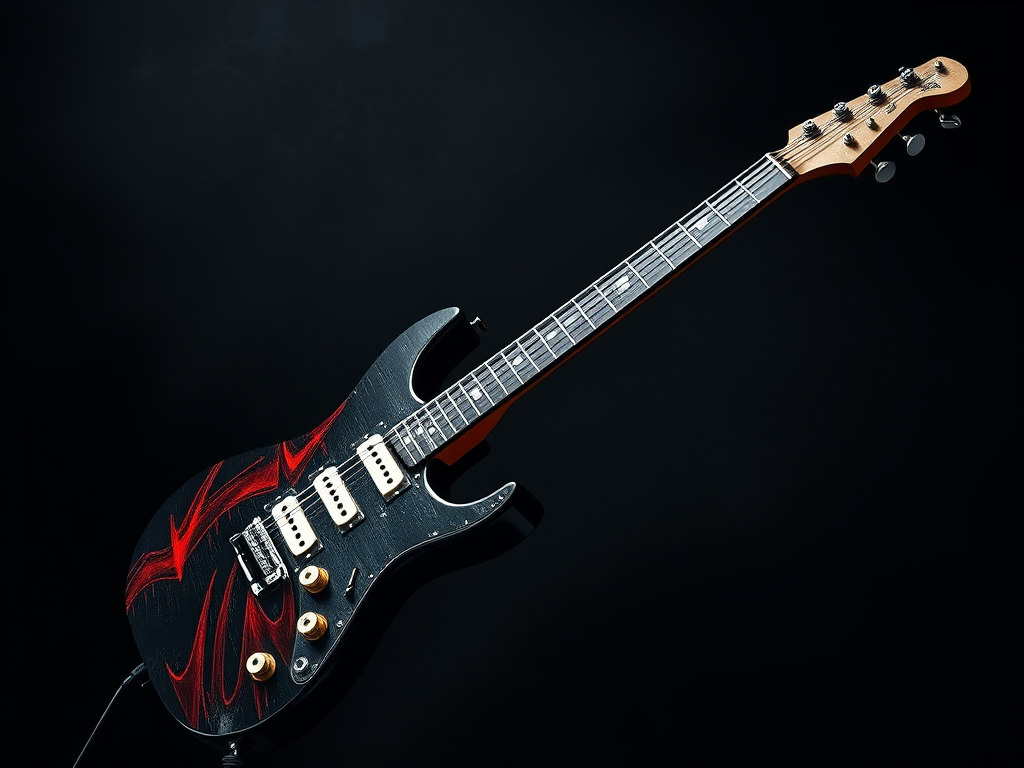
When a Genre Begins to Narrow Itself
Every genre begins as an open framework capable of absorbing external influences, but as it matures, its internal grammar stabilizes and becomes a boundary rather than a field of exploration. Metal shifted from broad heavy metal into narrowly defined subcategories such as metalcore, deathcore, and nu-metal; these subdivisions formed around increasingly specific measures of intensity and stylistic “authenticity.” The emo movement followed a similar trajectory, transitioning from a loose emotional and aesthetic movement into a fixed emo-core identity defined by established melodic and thematic cues.
Once this narrowing solidifies, the genre no longer addresses the broader cultural field but speaks primarily to itself. Technical refinement accelerates, production standards rise, arrangement and sound-selection norms converge, and the genre delivers increasingly precise variations of the same internal grammar. However, refinement without expansion reduces cultural reach. The genre remains functional, but its ability to introduce new value to a wider audience declines.
Signs of the End: The Spectacle of Self-Replication
Core-ization marks a stage of completion where the genre becomes structurally predictable. The listener can anticipate arrangement flows, timbral choices, and dynamic arcs because they operate within a standardized template shared among producers. As a result, the response becomes consistent: “competent, but expected.” Decline is triggered not by quality loss but by the disappearance of structural variance.
When outcomes are predictable, the listening experience no longer produces discovery. Technical precision continues to improve, but public interest contracts because precision alone does not create new meaning. The genre is maintained by insider communities while broader audiences shift to emerging hybrid forms that provide unfamiliarity and new interpretive angles. In this environment, genres do not collapse; they transition from open cultural communication to closed-loop self-replication.
Fandom-Driven Core Ecosystems
In rock and metal, internal authenticity standards formed strict stylistic boundaries that discouraged deviation; this preserved cultural identity but limited expansion. Eventually, the genre’s primary audience became musicians and long-term scene participants rather than new listeners. Intensity remained, but it pointed inward rather than outward. Growth becomes retention rather than expansion.
The Post-Core Era: Hybridization and Reallocation
No genre disappears; its elements persist in new contexts. When metalcore stagnated, hybrid metal forms incorporating electronic rhythm, rap phrasing, and modern production aesthetics gained traction. When EDM templates converged, elements such as sidechain dynamics and build-release arcs migrated into alt-pop, hyperpop, and festival-derived rhythm hybrids. Trap, after becoming the default rhythmic system of global pop, lost its differentiating value and fragmented into micro-regional rhythmic lineages such as Jersey-club-derived patterns, Detroit bounce phrasing, and Latin dembow syncopation.
The late phase of any genre consists of its vocabulary being redistributed into new applications. Revival requires the reintroduction of structural unpredictability and the allowance of non-optimized variation. Expansion resumes only when the grammar of a genre is once again permeable.




Leave a Reply