
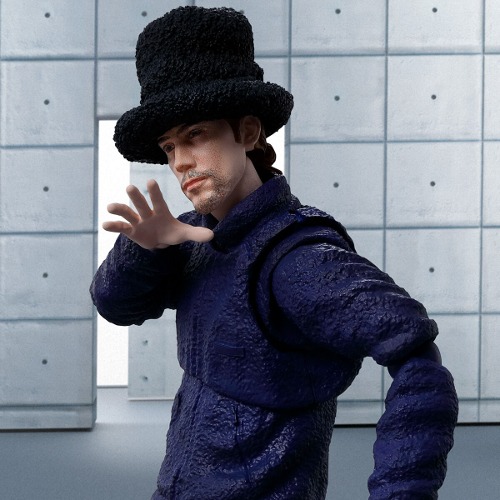
K-POP is often described as a blend of American R&B, hip-hop, and Japanese pop, yet the internal musical grammar tells a more specific story. Behind many of the harmony choices, mid-tempo grooves, and layered arrangements inside Korean pop tracks lies a consistent influence from Jamiroquai, the British acid-jazz and funk band that defined much of the 1990s. Their extended chords, chromatic bass writing, EP and Rhodes voicings, and rhythm-driven string parts circulated heavily within Korean studios during the period when the modern K-POP system was taking shape. Over time, these elements blended into the core production habits of Korean producers and eventually became a structural part of the genre.
During the early 2000s, Korean producers searched for Western references that could be broken down inside a DAW. Jamiroquai’s 1990s catalog offered a perfect blueprint. The tracks used tension-heavy chords such as 9ths, 11ths, and 13ths, and the bass lines moved with smooth chromatic motion that supported every harmonic shift. New producers could drag the songs into their sessions and immediately understand how each layer worked. The band’s precise balance between harmony, groove, and arrangement fit naturally into the emerging Korean preference for polished mid-tempo songwriting. This compatibility created a steady flow of Jamiroquai-inspired harmonic structures in K-POP during the early 2000s.
The influence became even clearer as the major Korean agencies began building their own sound identities. TVXQ’s mid-2000s dance tracks featured tension-driven chord progressions, fluid Rhodes textures, and active string lines shaped through rhythmic phrasing. BoA’s Korea-Japan crossover period made extensive use of mid-tempo funk elements that aligned with Jamiroquai’s approach to harmony and pacing.
Supreme Team’s track “Then Then Then” pushed this language into the hip-hop space, using EP-centered comping, chromatic bass movement, and a relaxed mid-tempo groove that closely reflects Jamiroquai’s AOR-leaning structures.
Clazziquai and Brown Eyed Girls explored electronic hybrids built on EP comping, chromatic bass patterns, and multi-layered arrangements similar to the British band’s design. Many OST composers adopted climbing string phrases and smooth chord movement, creating a unified system that reached beyond dance music and shaped ballads, R&B tracks, and drama soundtracks at the same time.
String writing illustrates this influence with particular clarity. Jamiroquai often used strings as an active rhythmic layer, not as a soft background pad. The lines moved with syncopation, climbed chromatically between chords, and linked transitions through flowing phrases. Korean arrangers absorbed this method and adapted it into the K-POP workflow. Countless 2000s Korean dance tracks feature strings that behave like rhythmic partners to the drums and bass. When combined with EP voicings, clean guitar lines, and tight groove writing, the result formed a sound that resembled the 1990s British acid-jazz structure even when the surface genre label suggested something different.
As practical-music education expanded in Korea, the relationship strengthened further. Composition teachers needed modern Western material that could demonstrate extended harmony, mid-tempo groove construction, and multi-layered arrangements. Jamiroquai’s tracks worked perfectly for this purpose. Students learned tension chord progressions, Rhodes-based comping, chromatic bass approaches, and hybrid layering techniques from the band’s recordings. These students later became the new generation of Korean producers, vocal directors, and session players. The same harmonic grammar spread across the entire industry, turning Jamiroquai’s musical language into a standardized foundation inside K-POP songwriting and arrangement culture.
The influence remains visible today. Many K-R&B artists rely on extended harmony and chromatic phrasing rooted in the same 1990s British structures. Idol B-side tracks frequently sit on mid-tempo grooves shaped by Rhodes, clean guitar, soft synth pads, and strings arranged with rhythmic articulation. OSTs continue to highlight rising string lines and smooth tension flow to support narrative shifts. Even when sound design follows current global trends, the internal skeleton of the track reflects Jamiroquai’s approach to harmony, pacing, and arrangement density.

Viewed from this angle, Jamiroquai’s role appears as a long-running structural influence threading through K-POP’s harmony, pacing, and arrangement systems. The extended chords, chromatic movement, EP-centered comping, rhythmic strings, and mid-tempo groove logic that shaped the British band’s 1990s sound continue to guide Korean producers across multiple generations. Much of the refinement people associate with modern K-POP — the smooth harmonic transitions, the tension-driven structure, the polished mid-tempo rhythm, and the layered arrangement style — traces back to the moment when Jamiroquai entered Korean studios and became part of the country’s musical vocabulary.
Today’s K-POP still carries this connection. The harmonic choices inside idol tracks, the construction of mid-tempo grooves, the use of Rhodes and strings in B-side songs, and the arrangement patterns found across K-R&B and OST music all reveal the same DNA. Jamiroquai’s 1990s work continues to influence Korean pop from underneath, shaping how producers think, how they write, and how the genre evolves.
Related Articles:
Behind K-Pop Demon Hunters: What It Reveals About the K-Pop Industry
The Fall of K-Pop: Trends Behind the Industry’s Downturn
K-Pop’s Struggles in the Sea of AI-Driven Streaming Services




Leave a Reply