

1. The New Threshold: From Quality to Passability
In the age of algorithmic distribution, the main criterion for exposure is no longer craftsmanship but data compatibility. Streaming platforms do not listen to songs; they analyze data structures. Mixing precision, mastering depth, reverb tone, and frequency balance were once signs of artistry. Today, they are standardized signals inside the algorithm’s quality filter. The platform’s concern is not aesthetic excellence but clarity and retention. If the sound is clean and the skip rate is low, the system approves it.
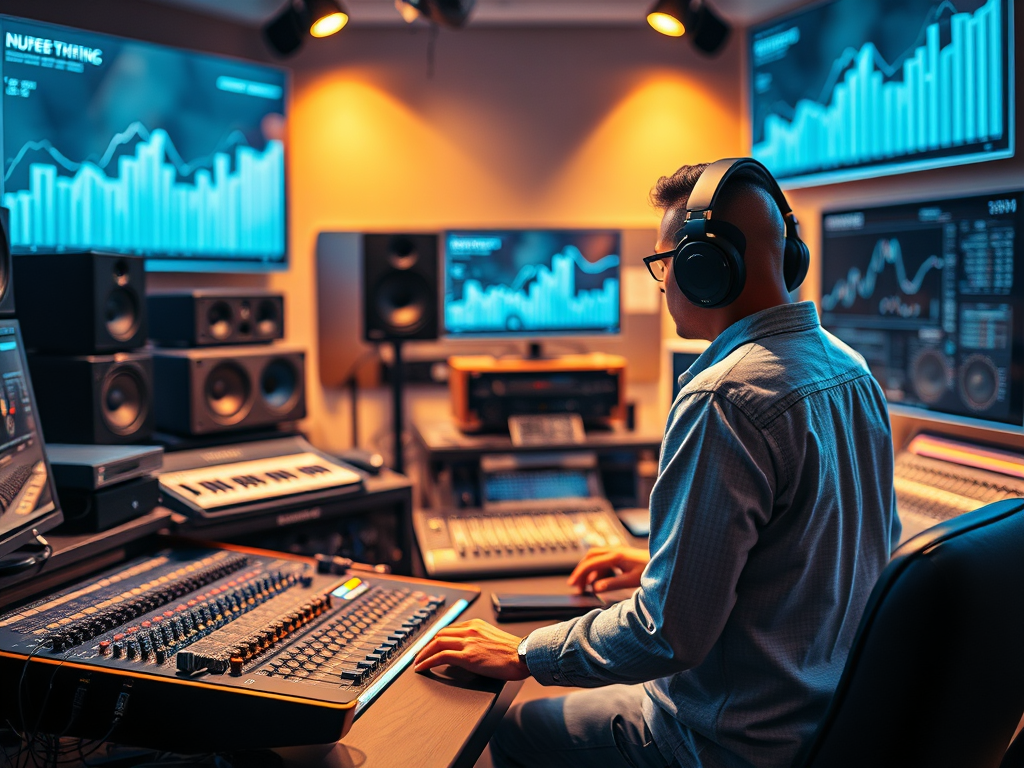
In this new environment, quality functions as a threshold rather than a value. Once a song passes that line, it is no longer judged as “good” or “bad” in the artistic sense but as “eligible data.” What once required major studios like NRG or Jungle City can now be done with a laptop, a mid-tier interface, and AI-assisted mastering tools. As long as noise control and frequency consistency meet the platform’s baseline, the song qualifies. This change has collapsed the barrier to entry, shifting the competition from production resources to algorithmic fluency. The race today is not about who can make the best track, but who can cross the threshold most efficiently and most often.
Related Article: How a Streaming Platform’s Algorithm Judges and Exposes Music
2. Music Becomes Data
Music, once treated as a singular creative work, has been absorbed into the architecture of machine learning. Each uploaded track becomes part of a growing dataset that combines waveforms, metadata, and listener logs into a shared vector space. Within this system, every song functions as a sample used to predict future behavior.
A song is no longer an individual statement; it is a data point feeding the algorithm’s next recommendation. The system does not care about artistic intention. It cares about skip rate, playtime, completion ratio, and engagement slope. Music has become the input variable of prediction, used to train the recommendation loop that defines what people will hear next.
3. The Algorithmic Composer
In this environment, intuition gives way to system literacy. The creators who succeed are not necessarily the most musically gifted, but the ones who understand how the system reads sound. They know how to design frequencies, hooks, and metadata so the algorithm can recognize and reuse them. They compose for machine readability as much as for human emotion.
The modern creator has become an algorithmic composer, a designer of recognition rather than expression. They understand intro length, energy curve, and frequency balance as linguistic cues inside the system’s grammar. To survive, they must think like both artist and engineer.
4. The Survival Formula: Frequent and Passable
Under AI filtering, one truth dominates: frequency outweighs perfection. Algorithms reward consistency because repetition stabilizes prediction. Each upload that meets the platform’s minimum threshold strengthens the brand embedding—the internal association between creator and data pattern.
The AI-based group The Velvet Sundown demonstrated this perfectly. Without any human performers, they released tracks at a rapid pace with consistent sonic profiles, metadata, and visuals. Over time, the system recognized them as familiar, and their exposure grew exponentially.
Five acceptable tracks can outperform one masterpiece. The same logic governs Spotify, YouTube, and Google Search. Deep, original work can be invisible if it does not appear frequently enough to be memorized by the model. Platforms reward regularity because it guarantees stable data feedback and higher profit margins.
This algorithmic reality also explains the structure of today’s K-Pop industry. Major labels no longer rely on full albums but on mini-albums and single-based release cycles. It is not just a creative trend; it is algorithmic engineering. Each release reactivates the artist’s data signal within the system, sustaining exposure frequency. Modern K-Pop is not only music—it is an industrial dataset optimized for visibility.
Related Article: The Velvet Sundown: How AI is Reshaping Music Creation
5. The Turning Point: My Own Realization
For a long time, I was on the opposite side of this logic. I focused on creating high-quality work: polished tracks, detailed mixes, and refined essays that reflected months of analysis. Through that approach, I earned direct shout-outs from global artists and labels I admired, including Repost support from The Chainsmokers and EDM platforms.
But eventually I realized something. In the current structure, perfection is inefficient. A masterpiece might move people, but if the system cannot learn from it, it disappears in silence. I began to see that the survival metric was not quality but frequency—the number of times you crossed the algorithm’s threshold.
So I changed my method. Instead of waiting for one perfect release, I began to create continuously: smaller, faster works that still met the baseline, yet appeared often enough for the system to remember. The difference was immediate. The visibility of my content rose steadily. Platforms remember the creators they can reprocess, not the ones they cannot categorize.
This shift reshaped how I see creation itself. The real challenge today is not making people feel, but teaching the system how to see you. The modern artist must design not only a sound but a learning loop.
6. The Relative Value of Quality
Within this structure, “quality” no longer means beauty or mastery but statistical survivability. A perfect mix with complex harmonics may fail because its data pattern diverges from what the algorithm expects. Meanwhile, a simple track with a clear hook, short intro, and repeated phrasing performs better.
Algorithms prefer predictable structures: early vocal entry, strong midrange, and rhythmic repetition that optimizes completion rate. Musical quality has thus shifted from aesthetic excellence to data efficiency. What matters is how effectively a sound pattern maintains engagement and minimizes skips.
7. From Artist to Engineer

Today’s musician is not just a performer but a system designer. They operate between human cognition and machine interpretation. Music has become a streaming process within a data flow. Those who thrive are not necessarily the most expressive, but those who understand the logic of exposure—how a waveform becomes metadata, how metadata becomes recommendation, and how recommendation turns into value.
The essence of music remains human, but the connection point between artist and audience has moved from emotion to computation. The hands are still human, but the interface is code.
8. Vinyl’s Return: The Human Counterreaction

The digital compression of art has sparked a collective longing for imperfection. The resurgence of vinyl, cassette tapes, and lo-fi sound is not nostalgia; it is resistance. People are searching for what cannot be indexed: friction, warmth, and presence.
Listeners no longer crave perfection. They want authenticity—the tactile crackle before the first note, the physical act of flipping a record, the continuity of time that an album provides. This analog revival is an attempt to recover what algorithms cannot understand. Even Billboard charts now show a rising share of tracks featuring live instruments. The desire for texture and imperfection is a response to data-driven uniformity.
9. The Listener Divide
This transformation has divided the audience into two distinct groups. Passionate listeners, who still value narrative, production, and sonic depth, now form a small minority. The majority simply seek songs that are good enough to play while they scroll.
Platforms, built around engagement metrics, optimize for this majority. They prefer content that loops, blends, and keeps users active. As a result, music consumption has shifted from appreciation to circulation. Listening has become background behavior. The paradox is that the more precisely the algorithm understands our preferences, the less we actually participate in choosing.
Relate Article: Exploring Rise of the Interactive Entertainment Market and Merchandise Trends
10. The Future of Musical Cognition
The modern industry belongs to those who can interpret data. The creative frontier has moved from emotion to structure, from composing melodies to composing systems. The next generation of impactful creators will not just write songs; they will design patterns of interaction between human attention and algorithmic behavior.
The most powerful composer today is not the one who feels the most but the one who trains the system the best.
11. Epilogue: The Threshold Era
We have entered the Threshold Era, a time when music, art, and writing must first pass invisible algorithmic filters. What exists beyond those filters is not judged by culture but by computation. The artist’s challenge is no longer to create beauty but to ensure recognizability within the system.
As algorithms expand and taste becomes measurable data, creativity itself is being redefined. The task is not to resist but to understand, to find ways for the human fingerprint to remain visible within the machine.
Because when music is judged by data, not by quality, the only art that survives is the one that learns to speak the system’s language.
Related Article: How the Music Market Moves Differently: Indie vs Mainstream


Leave a Reply