
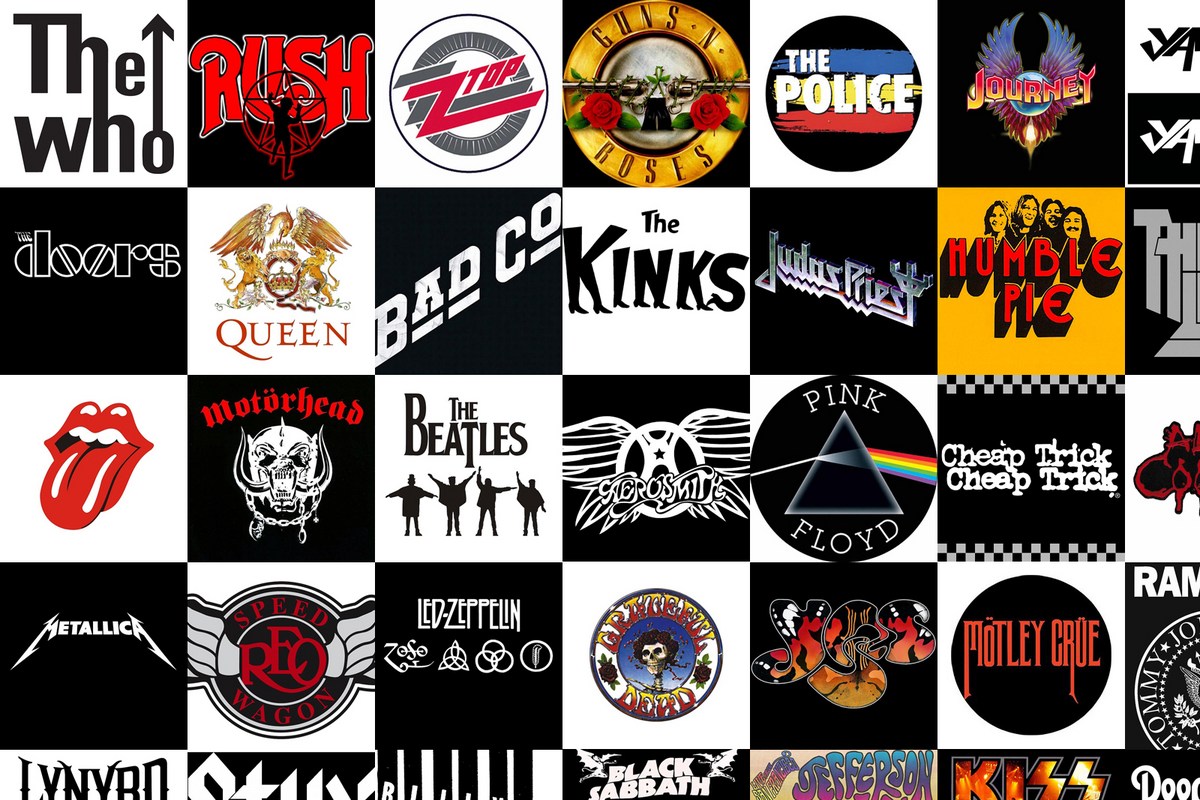
Since the late 2000s, the phrase “rock is dead” has repeatedly surfaced across global music communities and among industry professionals. This is not a vague impression that rock feels less dominant or that pop, hip-hop, and EDM feel stronger. It is an observable fact supported by consumer data, streaming share, and chart statistics, all showing a rapid decline of rock and metal in mainstream presence.

A genre that once dominated MTV, radio, and the touring market now appears almost absent from mainstream positions. The world’s largest market, the United States, shows the same pattern. According to Luminate and IFPI, hip-hop/trap takes roughly 30–35% of U.S. streaming share, pop around 20%, followed by R&B and Latin. Rock often sits around 10%, and pure streaming data places it even lower. The near-absence of rock bands on Billboard’s top tiers is fully confirmed by data.
This decline cannot be explained simply by shifting trends or generational preference changes. Rock and metal once had the strongest fandoms, the highest touring loyalty, and exceptional long-term consumption, yet the genre lost structural competitiveness after platforms became the center of distribution in the early 2010s.
The issue lies not in the value of the genre itself but in the intersection of consumption patterns, platform design, production structures, chart rules, and demographic changes within the fandom. Up to the 1990s, rock/metal was at the center of the market. Even into the mid-2000s, it held strong hegemony. But once the streaming era solidified in the early 2010s, the genre began falling behind structurally. Today, we can analyze the causal mechanisms behind why rock disappeared from the center of the industry ecosystem.
1. The First Generation That Failed to Adapt to Streaming
The rock/metal audience of the 1990s–2000s valued owning music. CDs, tapes, and vinyl were the default format, and digital platforms were optional. This consumption style clashed completely with what the streaming ecosystem demands:
- repeated plays
- playlist-driven listening
- fast switching
- short, fragmented listening sessions
Because of this mismatch, rock fans provided insufficient behavioral data to Spotify or Apple Music. The algorithms never learned to treat rock as a major consumption genre. In fact, rock/metal fans were among the slowest groups to transition into streaming.
Even after they finally joined the platforms, the structural disadvantage remained. By then, the algorithmic “foundation layer” had already been built by hip-hop, pop, EDM, dance, and R&B fandoms — the groups that were early adopters and produced:
- high repeat-play volume
- strong playlist inflow
- rapid listening turnover
- viral click behavior
Rock fans arrived late and did not produce the same behavioral metrics. As a result, the algorithmic model assigned rock a smaller market influence, locking in a structural disadvantage.
Related Article: How a Streaming Platform’s Algorithm Judges and Exposes Music
2. An Internal Ecosystem Over-Invested in Physical Media
Rock/metal places high value on recorded physicality: real amp distortion, drum air-pressure, texture, and the sense of “owning the sound.” Physical media became a symbolic status marker inside the culture. Up until the mid-2000s, this helped sustain the genre. Fans collected albums deeply and bands built solid revenue from it.
But once the market pivoted to streaming — physical sales no longer produced meaningful algorithmic signals.
Related Article: Exploring Rise of the Interactive Entertainment Market and Merchandise Trends
3. Album-Based Narrative Structures Colliding With the Streaming Paradigm
Major rock and metal acts historically built albums as unified narratives rather than collections of singles. Entire albums were structured like novels, with tracks flowing into one another. This enhanced immersion and strengthened genre identity.
Representative examples include:
- Pink Floyd — The Dark Side of the Moon, The Wall
- The Who — Tommy, Quadrophenia
- Dream Theater — Scenes from a Memory
- Nine Inch Nails — The Downward Spiral
- Mastodon — Leviathan
- Queensrÿche — Operation: Mindcrime
Linkin Park’s A Thousand Suns (2010) is often called one of the last mainstream-level conceptual rock albums, integrating themes of war, fear, technology, and political tension as a full narrative.
However, streaming consumption is built around:
- track-level listening
- single-centered marketing
- algorithms that reward early bursts of playcount, skips, and click-throughs
Long-form album narratives are inherently disadvantaged in this environment.
4. Chart Rules and Platform Mechanics Shifted Against Rock
Streaming charts depend entirely on listener behavior patterns:
- low repeat-play
- low playlist penetration
- older average listener age
- physical purchases that do not convert into streaming metrics
These conditions continually push rock/metal lower in chart calculations. Other genres generate far more algorithm-relevant behavior.
Related Article: When Music Is Judged by Data, Not by Quality: Inside the AI Filtering Era of Streaming Platforms
5. Collapse of New Generation Inflow
Because older rock fans stayed in physical consumption, the average age of the fandom rose rapidly. Meanwhile, younger listeners primarily discover music via algorithmic recommendation systems. Since rock receives little algorithmic exposure, younger generations lose opportunities to discover the genre at scale.
This caused:
- a closed fandom
- a breakdown in generational replenishment
- an aging audience poorly matched to platform behavior
6. Festival Demographics Reveal the Age Problem Clearly

Major rock festivals increasingly skew older. At Rock am Ring and Rock im Park, the core audience is now mid-30s to early-40s. Reports indicate:
- “Being 25 makes you one of the youngest in the crowd.”
- “Audience age here is obviously higher than other German festivals.”
When legacy bands from the 70s–80s enter the lineup, middle-aged and older attendees increase further. Multiple generations of long-term fans coexist, naturally raising the average age and making youth entry even harder.
The Market-Level Dynamics Behind Rock’s Decline
Rock and metal declined because multiple structural factors converged in the streaming era, especially the fandom’s inability to match the new consumption patterns.
- physical-centric consumption
- album-oriented listening
- generationally rigid fandom structure
- inadequate behavioral data for recommendation engines
- misalignment with streaming algorithm metrics
Despite having a passionate and loyal fanbase, rock’s fandom did not produce the behavioral patterns that modern platforms depend on. Without strong repeat-play, short-form listening, playlist inflow, and early click momentum, the genre fell to low algorithmic priority — cutting off exposure to younger generations.
Rock’s twilight emerged from structural shifts that reshaped the consumption environment, and the genre didn’t adjust to those conditions in time.




Leave a Reply